
Hot Throw
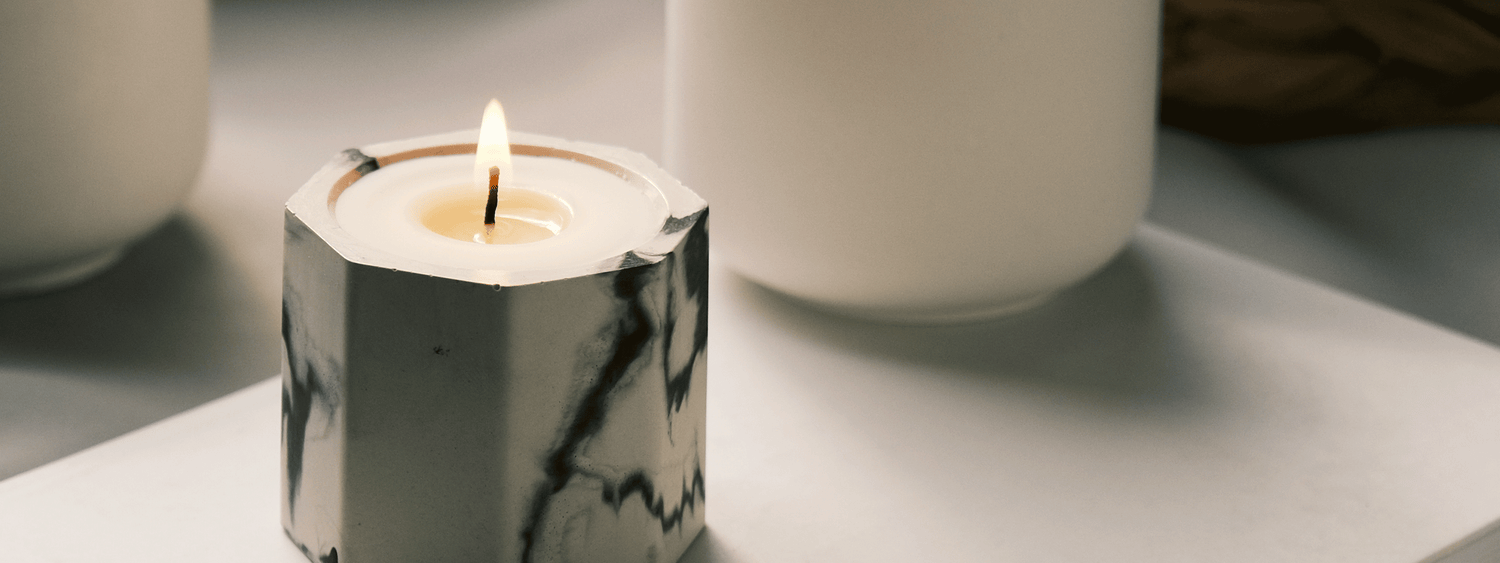
How strong a candle smells while burning.
Cold Throw
How strong a candle smells when not burning, i.e. straight off the shelf.
Melt Pool
The melted wax that the burning wick produces. Ideally, a candle's melt pool should reach the walls of the vessel/container to achieve the best hot throw and performance.
Cure Time
The waiting period before burning a candle after it has cooled to room temperature. Allowing your candles to properly cure will improve hot and cold throw.
Wax type |
Cure Time |
| 100% Paraffin | 2-3 Days |
| Parasoy Blend | 1 Week |
| 100% Soy | 1-2 Weeks |
| Coconut Apricot | 3-7 Days |
| Palm | 1-1.5 Weeks |
| Beeswax | 24 Hours |
Fragrance Load
The percentage of fragrance oil added to wax, measured by weight. If a wax has a fragrance load of 6% to 8%, you must stay within this usage rate to ensure proper performance.
Ex. To make a candle with a 6% fragrance load, calculate it by multiplying your total wax weight by 0.06 to get the amount of wax you will need.
Remember to measure in weight, not volume. Most candle makers measure in ounces or grams.
Flash Point
The temperature where fragrance oil can ignite when exposed to an open flame.
Tunneling
When a candle burns straight down the center without reaching a full sized burn pool. This can happen if your wick isn't large enough to support your candle or if the candle is not burned long.
Mushrooming
Carbon buildup on the wick that looks like a tiny black mushroom. They usually indicate a wick is too large or clogged.
Frosting
White crystal-like patches common in soy and other vegetable waxes. It is more likely to occur if candle dyes are used and/or if the wax is cooled quickly and inconsistently. Pour at the recommended pouring temperature for you wax and keep the candles warm as they cool.
Final Thoughts
Learning the language of candles makes it easier to navigate forums and other online spaces dedicated to candle creation.